SUMMARY
GOVARDHAN PUJA: THE MOUNTAIN OF MERCY offers a comprehensive and soul-stirring look at one of the most pivotal moments in ancient Indian history: the shift from fear-based ritual to love-based devotion.
For generations, the people of Vraj lived in awe of the tempestuous sky-god, Indra, offering him elaborate sacrifices to ensure the rains would fall. This book details the dramatic confrontation that occurred when a young boy named Krishna questioned these ancient traditions, suggesting instead that the people should honor the local environment—the mountain and the forests—that actually sustained them.
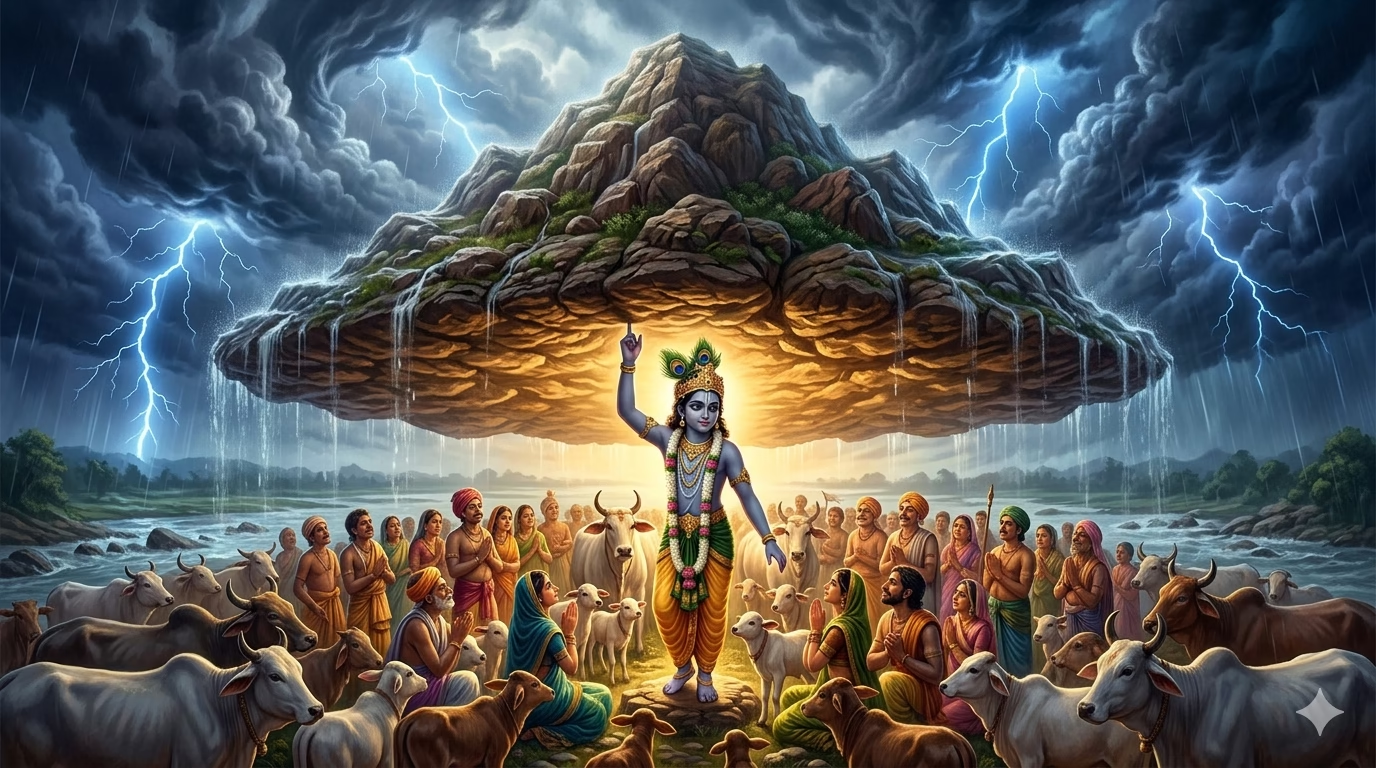
What follows is a legendary clash of wills. When King Indra retaliates with a cataclysmic storm intended to wipe out the village, the story reaches its breathtaking climax: the moment the village of Vraj found absolute shelter under the massive Govardhan Hill, held aloft on the tip of a child’s smallest finger. This narrative is not merely a myth but a profound exploration of community, the rejection of ego, and the divine promise of protection.
COPYRIGHT
Copyright © 2026 MiMi Flix
All rights reserved. No part of this publication may be reproduced, distributed, or transmitted in any form or by any means, including photocopying, recording, or other electronic or mechanical methods, without the prior written permission of the author, except in the case of brief quotations embodied in critical reviews and certain other noncommercial uses permitted by copyright law.
First Edition: April 25, 2026
PREFACE
The story of Govardhan Puja is etched deeply into the stones of Vraj and the hearts of millions across the globe. To understand this story is to understand the very transition of the human spirit from a state of appeasement to a state of connection.
In the ancient cultural and spiritual landscape of India, the elements were seen as powerful deities that required constant pacification. People lived at the mercy of the wind, the sun, and the rain. While respect for these forces remains vital, the story of Govardhan introduces a revolutionary concept: that the Divine is not a distant, vengeful ruler to be feared, but a close, loving protector who resides within the very nature surrounding us.
Today, this story is more relevant than ever. In an age of environmental crisis and global uncertainty, the message of Govardhan reminds us to respect our local ecosystems and to find strength in unity. As you read these pages, I invite you to step into the dusty lanes of Vraj, smell the damp earth of the coming storm, and witness the power of a faith that can move—or lift—a mountain.
GOVARDHAN PUJA: THE MOUNTAIN OF MERCY
THE DIVINE STORY OF PRIDE, PROTECTION, AND THE SACRED HILL OF VRAJ
THE GOLDEN VALLEYS OF VRAJ
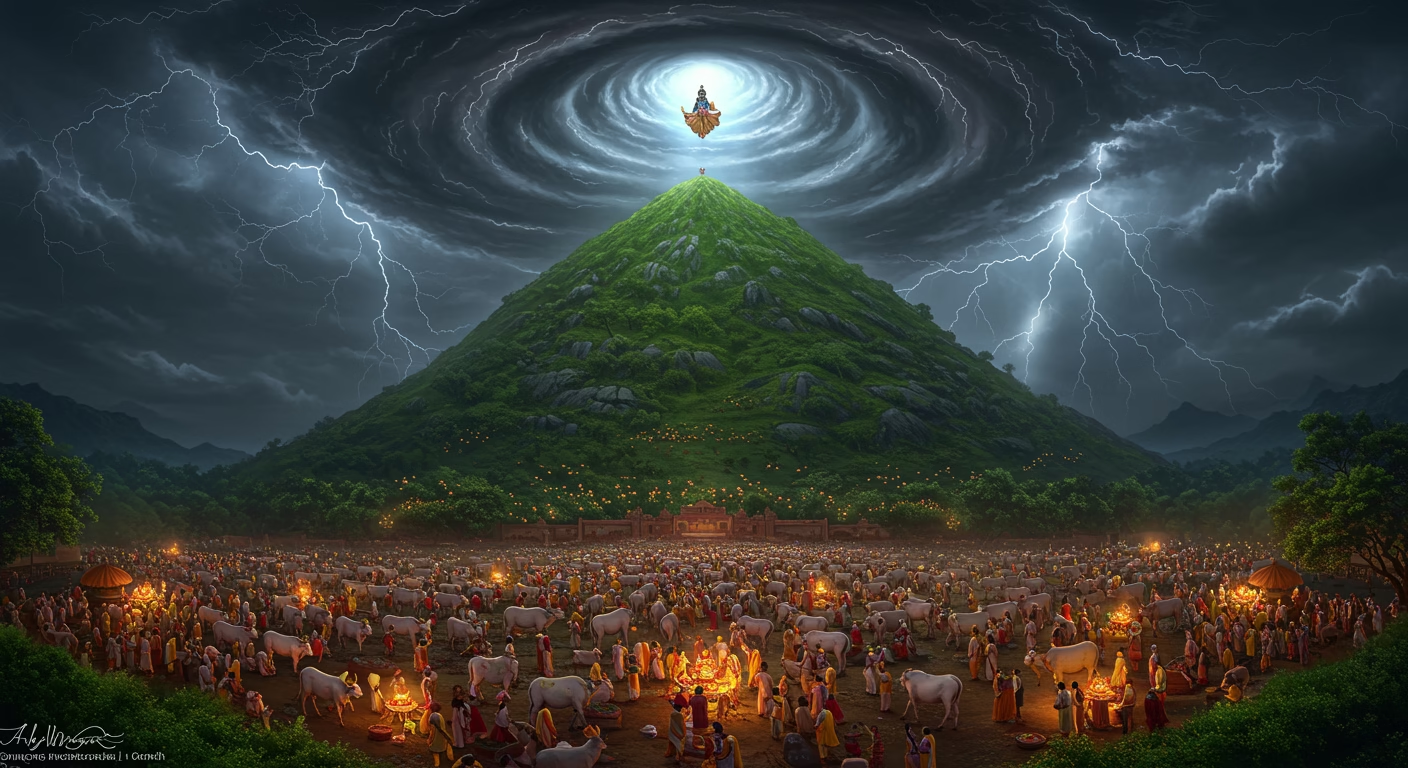
The world was once a place of simpler rhythms, and nowhere was this more evident than in the rolling, emerald hills of Vraj. It was a land where the dawn did not just break; it arrived with the soft lowing of thousands of cows and the sweet, wooden melody of a flute drifting through the mist. The village was nestled in a fertile valley, cradled by the winding, silver ribbon of the Yamuna River. To the people who lived there, Vraj was not just a home; it was a sanctuary where the earth felt alive beneath their feet.
The residents, known as the Gopas and Gopis, were a hardy yet gentle people. Their lives were intertwined with the land in a way that modern hearts can scarcely imagine. Their wealth was not measured in gold or coins, but in the health of their cattle and the richness of the milk that filled their earthen pots. Every morning, the dusty trails of the village were marked by the footprints of the cows as they were led to the lush pastures near the base of a magnificent, green hill known as Govardhan.
Govardhan Hill was the silent guardian of the valley. It was draped in thick forests, vibrant wildflowers, and cool, hidden caves. It provided clear spring water for the thirsty and sweet grass for the animals. The air in Vraj always smelled of parched earth meeting the first drop of rain, mixed with the scent of wild jasmine and the smoke from small cooking fires where fresh butter was being churned.
Life moved in a circle. The sun rose, the cows grazed, the children played, and the elders spoke of the ancient laws of nature. There was a profound peace here, a sense that as long as the seasons turned and the river flowed, all was right with the world. However, beneath this tranquility lay a deep-seated tradition born of necessity and, perhaps, a touch of lingering fear. For all the beauty of Vraj, the people knew that they were small, and the heavens were vast.
THE GATHERING CLOUDS
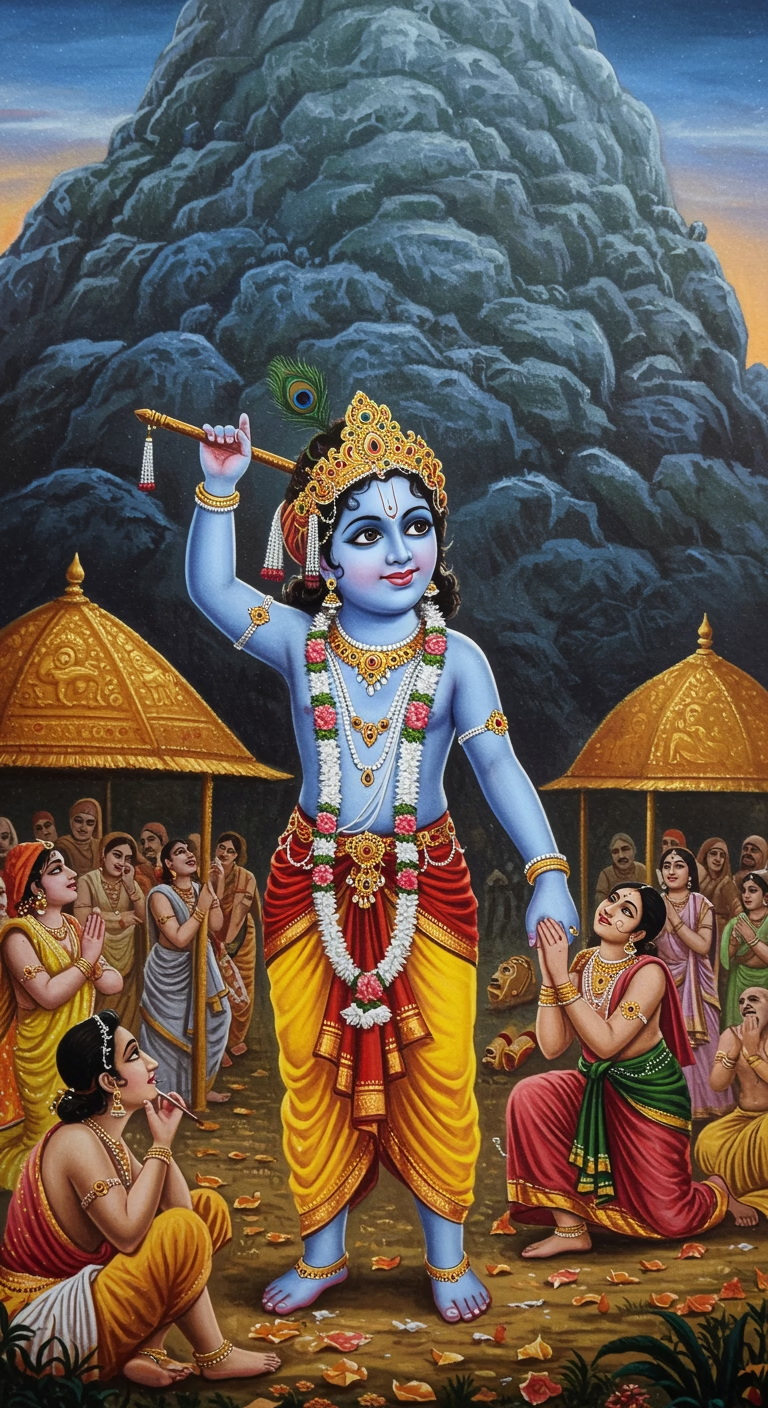
As the summer heat began to mellow, a different kind of energy took hold of the village. The elders, led by the noble and kind-hearted Nanda Baba, began to gather in the center of the village. The atmosphere, usually light and carefree, grew heavy with the weight of religious duty. It was time for the annual Indra Yajna.
📚 LOGIN TO READ & LISTEN FULL E-BOOK & AUDIO-BOOK
NEW HERE? CREATE AN ACCOUNT IN SECONDS.
YOU MAY ALSO LIKE
THE ETERNAL ADVENT: HANUMAN JAYANTI
Hanuman Jayanti Birth Story SUMMARY The Eternal Advent: Hanuman Jayanti is a meticulous and immersive exploration of one of the most sacred events in Vedic history. While many are familiar with the heroic deeds of Lord Hanuman in the Ramayana, few have traversed the deep, multi-layered journey of his arrival on Earth. This book chronicles the transition of the eleventh expansion of Shiva—the Rudra Avatar—from the celestial realms into the...
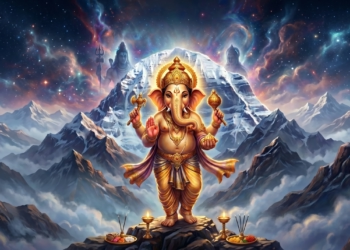
GANESH CHATURTHI: THE BIRTH OF GANESHA
Birth of Ganesha SUMMARY In the frozen, silent reaches of Mount Kailash, a divine mother’s longing for a loyal protector gives rise to a legend that will echo through eternity. THE BIRTH OF GANESHA: FROM SANDALWOOD TO DIVINITY tells the profound story of a boy created from devotion, whose unwavering "loyalty" to his mother, Goddess Parvati, leads him into a historic confrontation with the mighty Lord Shiva. This is not...
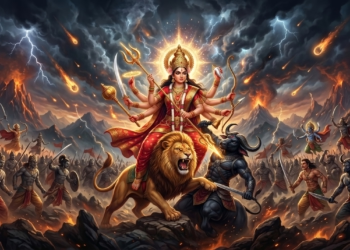
THE DIVINE VICTORY: THE STORY OF DURGA PUJA
Durga Puja SUMMARY This eBook tells the ancient and powerful story of Goddess Durga and her battle against the forces of evil. It is a story that has been passed down through thousands of years, representing the eternal fight between right and wrong. The narrative follows the rise of a terrifying demon king named Mahishasura, who gained a special power that made him think he was better than the gods....
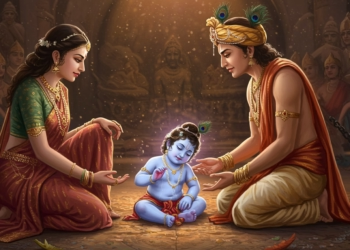
KRISHNA JANMASHTAMI
KRISHNA JANMASHTAMI PREFACE The story of Krishna Janmashtami is more than just a tale from the past; it is a celebration of hope that has lived in the hearts of millions for thousands of years. In the middle of a dark, stormy night, in a small prison cell in the city of Mathura, a light was born that would change the world forever. This book was created to tell that...


